
Commercial Epoxy Flooring
in Searcy, AR
A coating system chosen for what your commercial floor really deals with: how much traffic crosses it, what spills onto it and the environment it has to hold up in.
Your Floors Should Work as Hard as Your Business Does
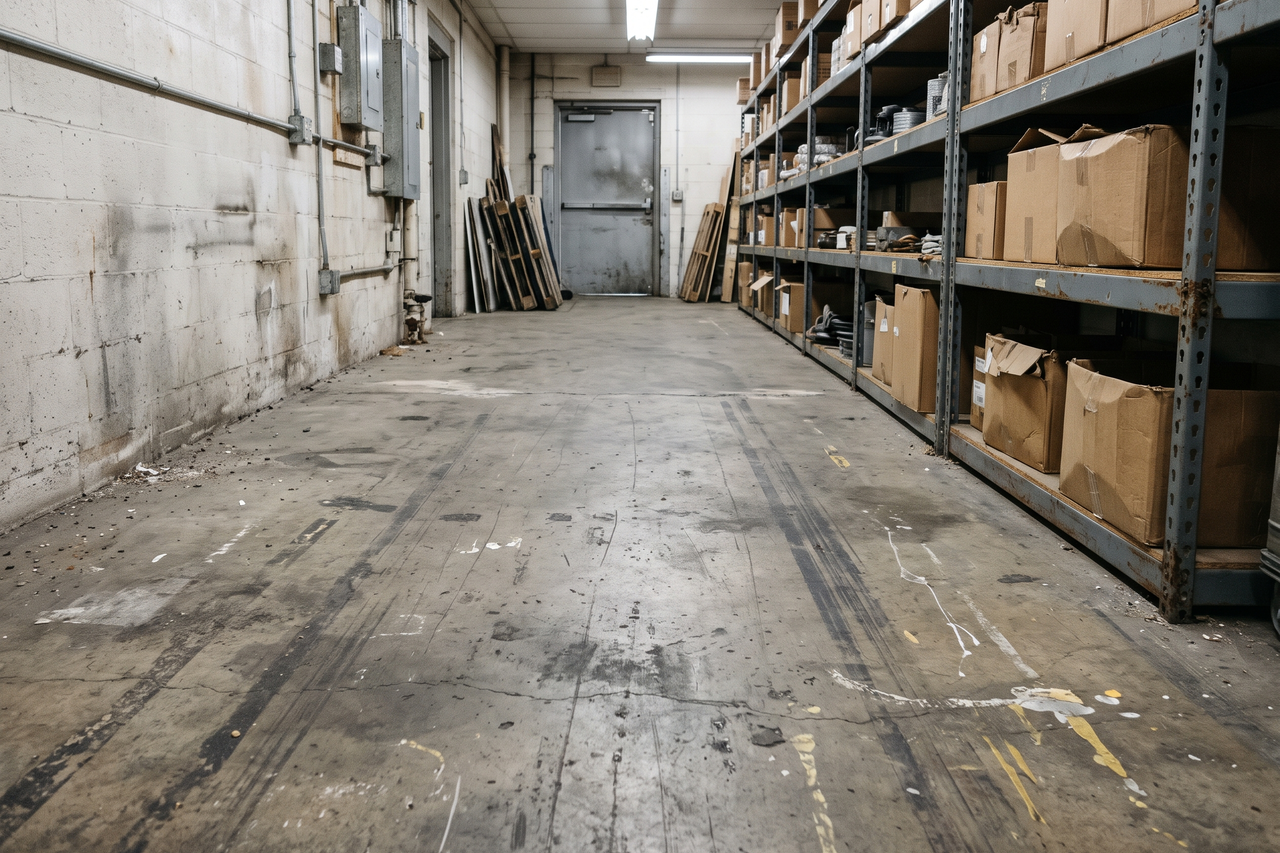
Floors in a working business endure a steady, repetitive grind that most concrete never sees. Entryways, checkout areas and main aisles see a constant flow of shoes and carts for as long as the doors stay open. Equipment rolls along the same lanes again and again, wearing at the same patches. Bare concrete soaks up whatever reaches it under all that use, and the surface slowly gives way.
Customers form an opinion about a business well before reaching the register. Worn walkways, stains by the checkout and crumbling spots near the door communicate something even when no one consciously glances down. That impression lands whether you want it to or not.
Unsealed concrete in a high-traffic business also becomes tougher to clean over time. Small cracks and rough patches from steady use trap grit that a mop can’t completely reach. Employees put in more cleaning effort and see smaller results.

The Right Floor Starts With Understanding Your Space
Commercial floors are asked to do very different jobs. A vehicle repair bay, a clinic hallway, a retail sales area and a restaurant kitchen each face their own blend of traffic, cleaning chemicals, spills and cleaning frequency, and appearance matters more in some of those spaces than in others.
The flooring professional starts with how the floor actually works on an ordinary day: the traffic and loads that move across it, the cleaners and chemicals it routinely contacts, how strongly its look affects customers, and any need to coordinate access to the space. The coating recommendation comes from that review instead of a generic default.
Commercial coating choices span many kinds of settings. Solid color works well for back-of-house and utility spaces. Flake systems bring texture and visual appeal. Metallic finishes fit sales floors, lobbies and client areas where the floor helps create the atmosphere.
A Commercial Flooring Project Without the Guesswork
A commercial coating project moves along a clear route from the initial conversation to the completed floor. This is how that route typically unfolds.
01
Tell Us About Your Property
Share what kind of business it is, how the floor is used on a typical day, the present condition of the concrete and any access concerns worth flagging for your installer.
02
Get a Flooring Plan
The flooring professional comes to the property, examines the concrete, observes how the space runs and develops a prep and coating plan built around that floor and how it is used.
03
Transform Your Space
Your installer completes surface prep and coating in an order you go over together in advance. How the job is staged and scheduled depends on the project and the contractor, with floor size, the selected system and inspection findings all playing a part.
Planning a Commercial Flooring Project?
Describe the space and what the floor is up against to request a commercial flooring estimate. Feel welcome to add measurements or photos of the existing floor if you have them.
The Wrong Floor Can Become an Expensive Problem
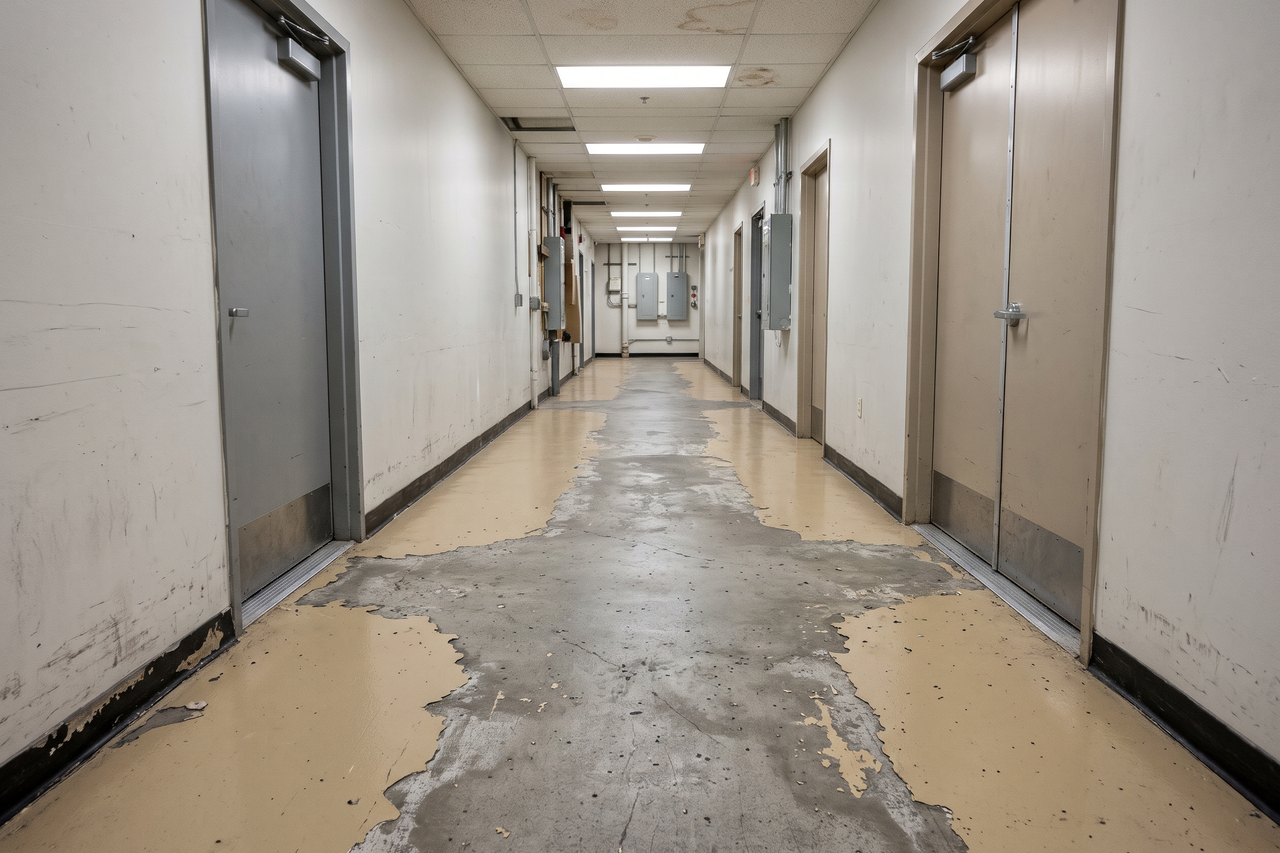
Imagine a high-traffic corridor or back room where the coating has started peeling at the seams. What seems like a cosmetic problem grows into a larger one. Curled edges turn into a tripping hazard, and grime packs into openings a mop can’t reach beneath.
Repairing that kind of failure in a working business costs more than labor and materials. The area must be blocked off, shelving or equipment relocated, the failed coating stripped, the slab checked and readied again, and a fresh system put down, all at a point the business never budgeted for.
Choosing a coating that fits how the space is really used, and investing genuine effort in slab prep before application, is the surest way to avoid that situation.
A Floor That Makes Your Space Work Better
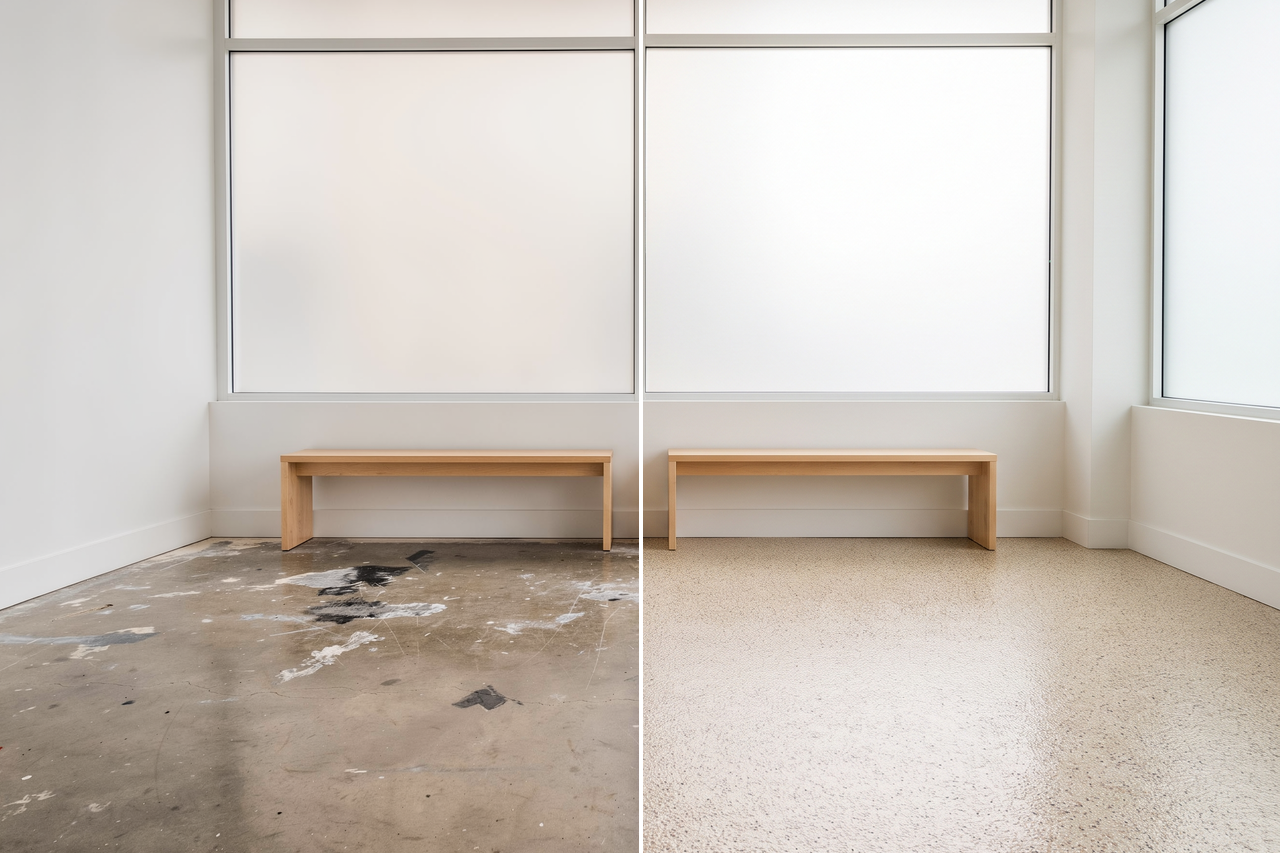
Pairing the coating with the conditions the floor truly sees makes routine maintenance far simpler. Spills rest on the sealed finish, ready to be wiped before they soak in, and no specialty cleaners are required. Regular sweeping and mopping handle most of the upkeep. A sealed floor also takes frequent washing far better than bare concrete put through the same routine.
A coated surface reflects overhead lighting better than raw concrete, giving aisles and work areas a brighter feel without new fixtures. Lane striping, zones set apart by color and directional markings can be included, based on the system’s capabilities and your installer’s advice for the layout.
A coating selected for its setting turns the floor from an ongoing upkeep burden into something that helps the business run smoothly.
What Does Commercial Epoxy Flooring Cost?
Cost depends on the specifics of each job: overall square footage, how sound the slab is, how much prep and crack filling it requires, which system fits the environment and the finish you pick. Calls for tougher chemical resistance, added slip resistance or a specialty look raise both the prep work and the materials.
Working around normal operations or tackling the floor in sections really depends on the project and the contractor; raising it early helps shape a realistic estimate.
Common Commercial Flooring Questions
Does my business have to shut down while the floor is being coated?
That depends on the facility and how much floor is involved. In some layouts one section can be coated while the rest stays in use, and in others the entire floor has to be cleared. Any phasing plan depends on the project and the contractor; following a walk-through, your installer can describe what is workable.
Does a coated business floor take a lot of upkeep?
Far less than bare concrete. Spills rest on the surface and come up with ordinary cleaning products before they have a chance to soak in. Most maintenance is simple sweeping and mopping, and a sealed surface handles repeated washing far better than raw concrete under the same treatment.
Will an epoxy floor stand up to heavy carts and equipment?
That depends on the product and how hard your equipment works the floor. Not every coating is built for constant strain from loaded carts, ride-on scrubbers or a heavy mix of traffic. On site, the flooring professional considers the equipment, its weight and how frequently it travels the floor before suggesting a system.
How is a coating picked for a commercial floor?
The process begins with understanding how the floor gets used. The review weighs foot and equipment traffic, the cleaning agents and chemicals that regularly reach the surface, the level of polish the business expects, and any access needs for the job. Those factors shape the recommendation.