
Polyaspartic Floor Coatings
in Searcy, AR
A hard-wearing finish that stands up to sunlight, specified for busy concrete around your slab’s real condition and the way the room gets used.
Your Concrete Floor Shouldn't Be the Weak Point of Your Space
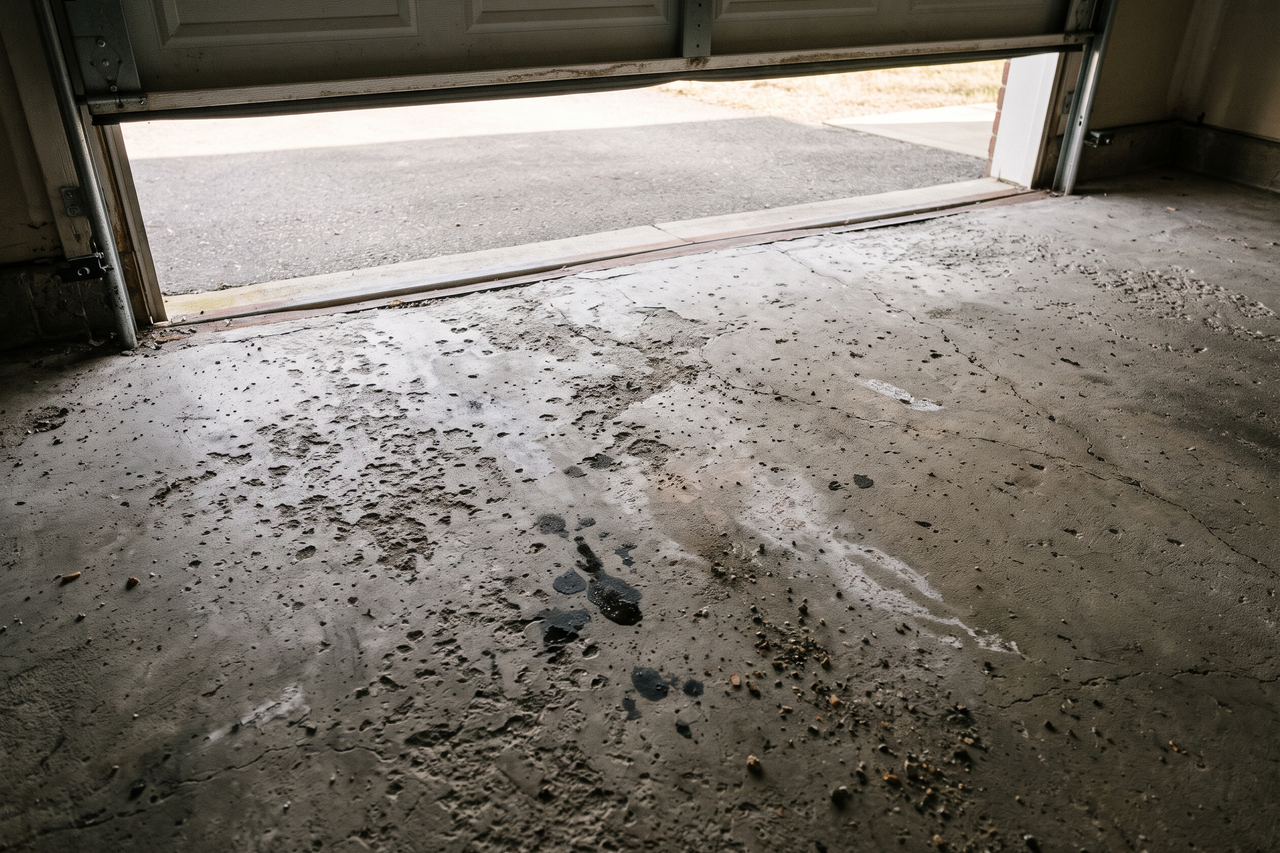
Uncoated concrete absorbs a lot of punishment that goes unnoticed until the damage is visible. Dripping oil, road brine and cleaners sink into its open pores, and stains become tougher to remove the longer they stay. Tires, carts and footwear wear the surface away gradually, and moisture rising through the slab can lay the groundwork for a coating that releases later on. Minor flaws tend to turn into repairs no one planned to pay for.
Coatings do not all react to that pressure in the same way. Some epoxies are sunlight-sensitive, and a floor near an open bay door or a wall of windows can gradually turn amber or chalky, which usually ends in recoating. Other products carry cure requirements owners did not fully think through when choosing.
Protecting a concrete floor that sees real use is usually a sound investment. The more important question is which system fits this slab and this purpose, since that combination determines how the surface performs under actual traffic.
The Right Floor Coating Starts With How You Use the Space
Polyaspartic earns attention for two traits: stronger resistance to ultraviolet light than many conventional epoxies, and good resistance to abrasion. Its chemistry likewise generally cures faster than many traditional epoxy systems; planners tend to weigh that. Floors bathed in sunlight, surfaces that are scrubbed regularly and covered outdoor slabs facing the weather benefit most from those strengths.
Still, polyaspartic is not where every recommendation lands. What the slab has been through, what its moisture tests show, how the space is used and what the budget allows all shape the advice. Some floors are better off with epoxy underneath and polyaspartic on top, a combination that can outperform either one by itself, and whether that fits is something the concrete assessment settles.
Advice is most useful when it comes from a person who has stood on your slab. For anyone wanting some background beforehand, the comparison guide below contrasts the two materials point by point.
A Better Floor Is Easier Than You Think
Getting from raw concrete to a sealed, finished floor means a few more decisions than people tend to expect, and a plan makes each of them simpler.
01
Tell Us About Your Space
Let us know the floor’s location, its present condition, the activity it sees, and which qualities you value most in the finished surface, whether sun resistance, appearance, grip or a blend of the three.
02
Choose the Right System
With the inspection done and moisture readings taken, your installer weighs how the space will be used and points toward a direction: polyaspartic throughout, epoxy below with polyaspartic above, or another system that better fits this concrete.
03
Transform Your Floor
Once the system is decided, the flooring professional carries out prep and application after talking the plan through with you, so no stage is a mystery.
Ready for a Floor Built to Perform?
Tell us about the floor and what you need the finished surface to accomplish to request a polyaspartic flooring estimate. A handful of photos showing the concrete as it stands today make the scope easier to grasp.
A Great Coating Can't Make Up for Poor Preparation
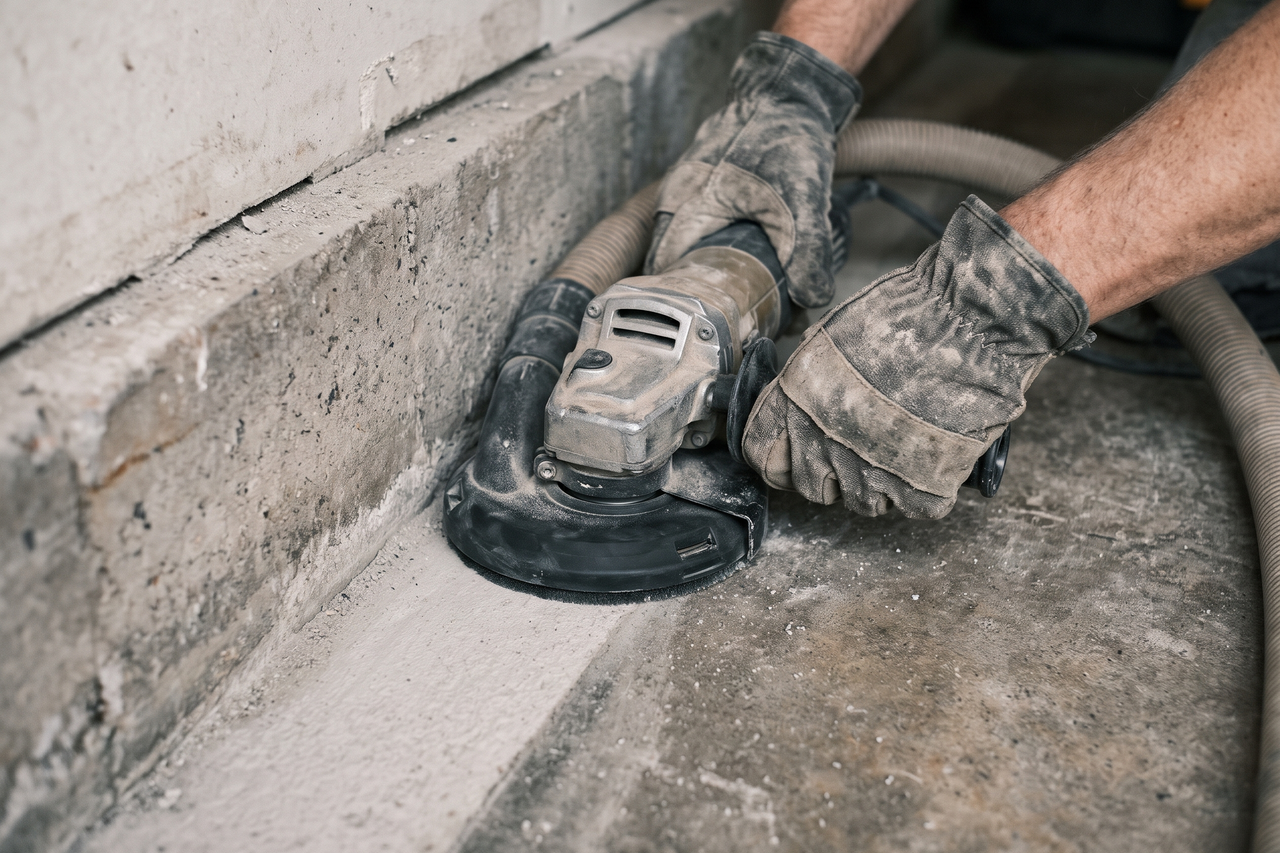
Correct preparation is where polyaspartic performance starts. Mechanical profiling, a thorough cleaning and moisture testing all belong in that work; drop one and the coating lands on a surface poorly suited to a dependable bond, so adhesion is compromised from the outset.
Because this material generally cures faster than many traditional epoxy systems, mistakes are harder to correct after mixing and spreading are underway. A slab that is only partly ready is not ready at all.
Proper grinding, defect repair and moisture checks hand the coating a sturdier starting point. If a coating separates early, preparation is often part of the problem, with slab moisture, product selection and installation conditions also in play. Addressing every one of them early gives polyaspartic a better foundation for long-term performance.
A Floor That Looks Better and Works Harder
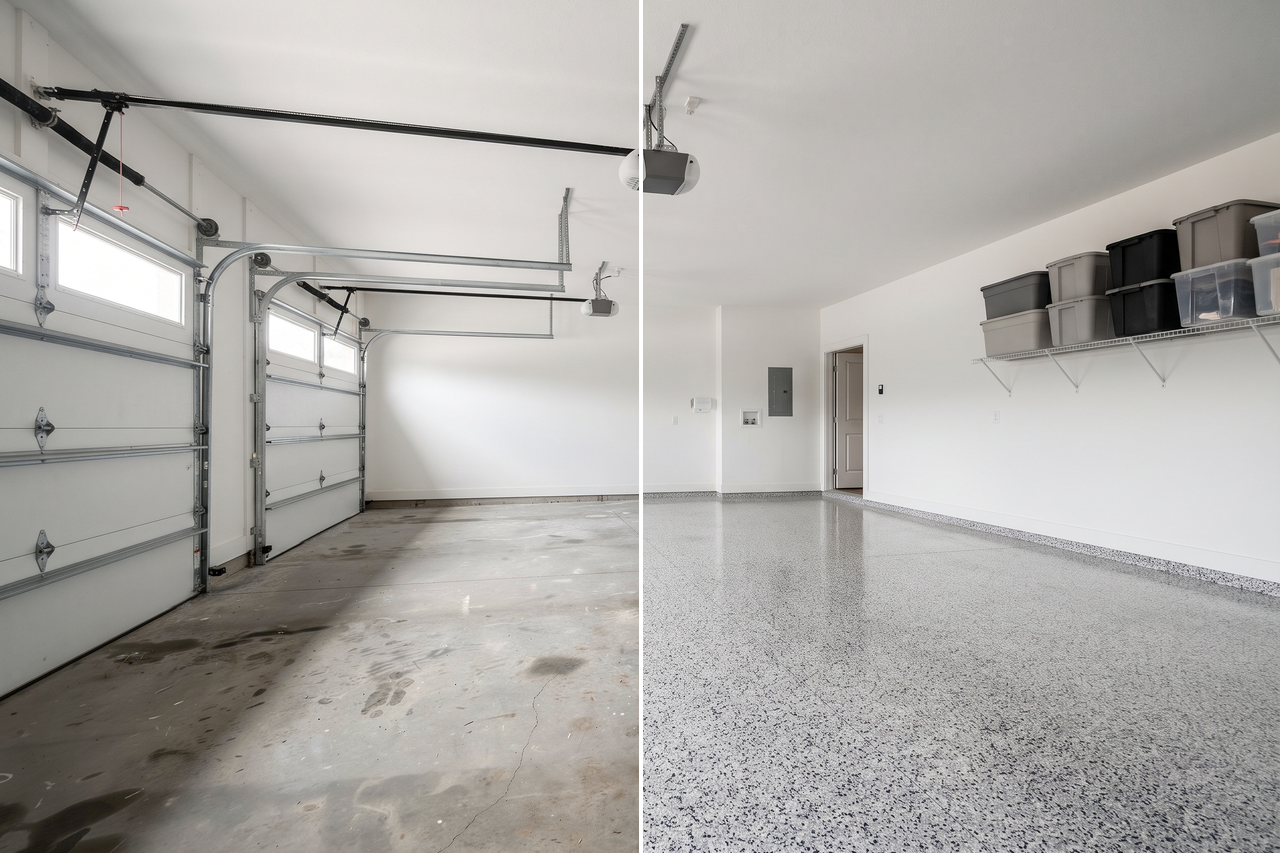
A polyaspartic finish keeps spills and grime sitting at the surface instead of letting the slab absorb them. Antifreeze, solvent splashes and tire-tracked mud are far easier to wipe from coated concrete than from an uncoated floor.
Adding a flake broadcast gives the color more depth and the surface a slight texture, a look that fits home garages and lighter commercial rooms. For spaces where wet footing worries you, your installer might mix in an anti-slip additive or go with a topcoat that has texture. What ends up in the specification follows the space’s needs and the installer’s professional judgment.
Owners with scheduling concerns often ask about polyaspartic, since this chemistry generally cures faster than many traditional epoxy systems. Any schedule still depends on the project and the contractor; floor size, current condition, prep scope and the selected system all factor in, and your installer lays out the expected sequence before anything starts.
What Do Polyaspartic Floor Coatings Cost?
Several things set the price of a polyaspartic floor: the slab’s condition and the prep it needs, how many cracks or spalls must be repaired, whether the system is polyaspartic from bottom to top or epoxy capped with polyaspartic, how many square feet are involved and which finish you prefer.
Because no two slabs are alike, a responsible figure depends on seeing it. A price that reflects the actual job follows measurement of the area, a check of the concrete and a full grasp of the scope by the flooring professional.
Common Questions About Polyaspartic Floor Coatings
Does polyaspartic cure quicker than epoxy?
Put simply, this chemistry generally cures faster than many traditional epoxy systems, something worth factoring into planning. On any given floor, cure behavior hinges on the product, how many coats go down, and site temperature and humidity. Before work begins, your installer explains what to expect.
Does polyaspartic suit all types of concrete floors?
One product cannot suit all slabs. Compared with many conventional epoxies, polyaspartic holds its color better under UV, and the chemistry generally cures faster than many traditional epoxy systems; owners appreciate both traits. Still, concrete condition, intended use and budget decide the right fit. Standard epoxy builds good thickness and serves many sheltered indoor rooms well. Floors that see more sun or wear commonly pair an epoxy base with a polyaspartic topcoat. What gets recommended comes after the floor is assessed.
How does sun exposure affect which coating gets chosen?
Under constant sun, many conventional epoxies can shift toward amber or fade, and recoating is the usual fix. Many standard epoxy products give way to that shift sooner than polyaspartic does, so garages and rooms flooded with direct or reflected light make it worth a look. Whether this matters for your slab depends on the specific product and the sunlight your space truly receives, and an in-person look settles that best.
Is polyaspartic an option for outdoor slabs?
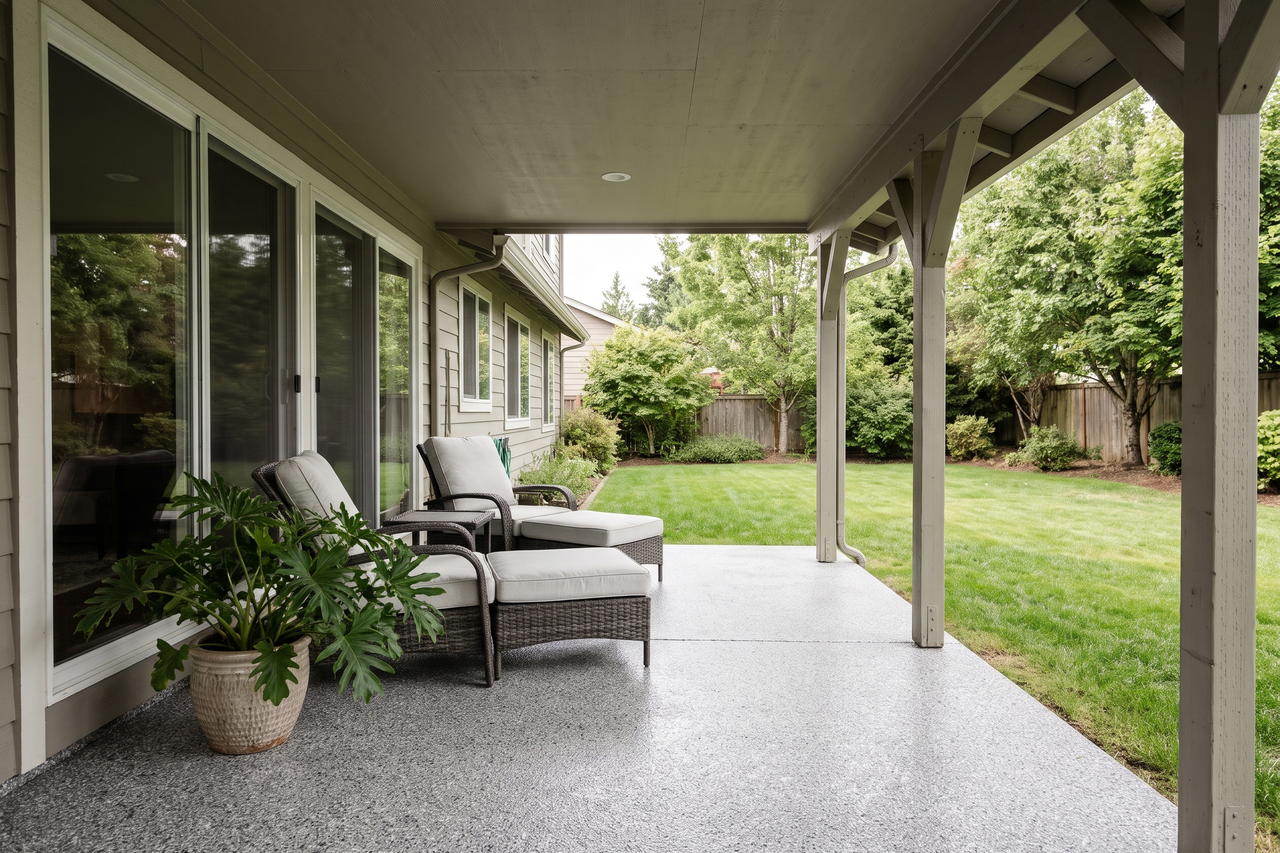
Possibly, after an evaluation. Covered patios, carports and other sheltered slabs may be good candidates thanks to polyaspartic’s UV resistance and abrasion performance. Suitability rests on the slab’s condition and drainage, how much sun and weather it faces, and the use the surface has to support, so the concrete gets assessed on site first.
Will a glossy coating become slippery when it gets wet?
A high-gloss surface can turn slick once it is wet. Flake broadcast gives footing some texture, and where wet traction matters, the specification can call for anti-slip additives or a textured topcoat. Raise traction with your installer before anything is finalized.